

What to Do With Costume Gear After a Rainy Event
Rain at a LARP, Renaissance faire, or outdoor photo shoot does not automatically ruin a costume. The important part is what happens after the event. Wet pieces should not stay bundled in a bag, closed in a trunk, or hung next to a heater. Separate the materials, remove surface moisture, restore the intended shape, and let every layer dry with steady air circulation.
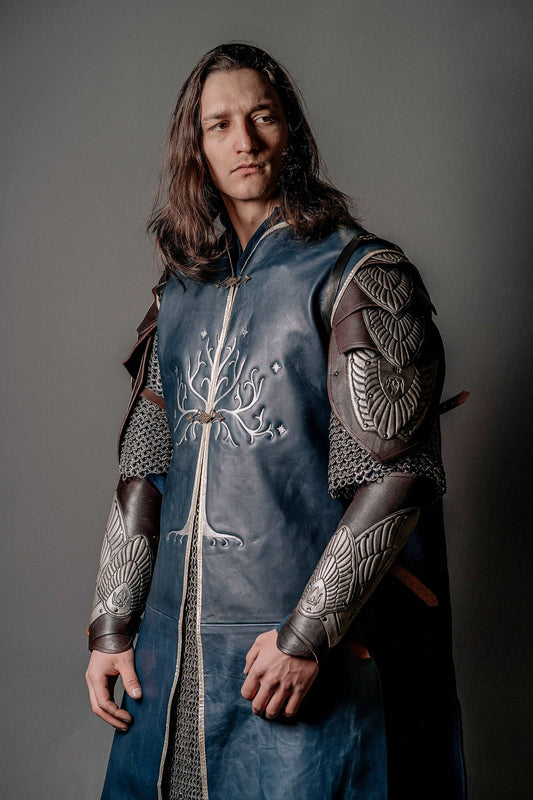
This guide covers a mixed costume made from leather, wool, cotton, and brass. Those materials respond differently to water, so there is no single treatment for the whole outfit. The live listing for this ready-to-ship leather armor costume identifies all four materials, making it a useful example of why costume gear should be taken apart before drying.
Start the moment the event ends
Do not leave damp gear compressed overnight. As soon as you reach a dry place, unpack everything and photograph the complete arrangement if you may forget how straps or layers connect. Empty pouches and pockets. Remove belts, jewelry, detachable trim, armor plates, and other accessories when the construction allows it. Never force a wet buckle, knot, or leather strap that has become stiff.
Blot standing water with a clean, colorfast cloth. Press rather than rub. Rubbing can move surface dirt into fibers or disturb a dyed finish. If mud is still wet, avoid scrubbing it across a larger area. Let the piece stabilize and follow the maker's cleaning instructions for that material.
Keep dark and light textiles apart while they are wet because color transfer is possible. Place small components in labeled groups so the costume can be reassembled correctly. If the gear belongs to several people, label each person's pieces before spreading them out.

Separate leather from fabric and metal
A layered costume can hide moisture between materials. Open straps and lift overlapping panels so air can reach both sides. If leather is laced to wool or cotton and cannot be removed safely, position the piece so neither surface is trapped against a table or wall. Rotate it during drying instead of leaving one side covered.
The example armor is listed as natural leather with brass, cotton, and wool. Its leather is described as hand dyed with vegetable dyes, and the listing notes that natural-material color can vary. That is a reason to avoid improvised cleaners or aggressive rubbing. The product page does not provide a washing, waterproofing, or conditioning formula, so contact SokolArmory before applying a chemical product.
Visible props and accessories are not necessarily part of a purchase. The live listing says display accessories are excluded. When caring for your own outfit, check the materials of every actual component rather than assuming a photographed prop should receive the same treatment.
Air-dry leather slowly and support its shape
Set leather armor in its normal form on a clean, dry support. A cuirass can rest on a broad padded hanger or mannequin if the support does not stretch the shoulders. Bracers and belts can lie flat with gentle curves preserved. Do not fold wet leather sharply or place a heavy object on top of it.
Use room-temperature air and ventilation. Keep the piece away from radiators, hair dryers, open fires, hot car interiors, and direct sun. Concentrated heat can dry one area much faster than another and may contribute to hardening, distortion, or color change. The Canadian Conservation Institute's leather guidance recommends avoiding damp storage and localized heat while maintaining good air circulation.
Turn the armor periodically and check the undersides of plates, strap keepers, and stitched overlaps. Replace any damp towel underneath with a dry one. Handle the piece gently while wet because leather can be more vulnerable to stretching and distortion.
Do not apply oil, wax, saddle soap, alcohol, disinfectant, or household leather conditioner simply because the surface feels different during drying. A treatment that suits one tanning method or finish may darken, soften, stain, or seal another. Wait until the item is fully dry, then use only a product and method confirmed by its maker. Test any approved treatment in a hidden area first.

Dry wool and cotton as garments, not as armor
Check any sewn-in care label before doing more than blotting and air-drying. Washing instructions depend on the fabric, dye, trim, lining, and construction. A wool tunic with leather edging cannot be treated like an untrimmed machine-washable shirt.
For wool, gently restore the garment's shape and dry it at room temperature away from direct heat and sunlight. Woolmark's care guidance specifically recommends room-temperature drying away from direct sunlight or heat when wool becomes wet. Lay a heavy knit flat on a clean towel so its own water weight does not stretch the shoulders. A structured woven garment may be placed on a suitable broad hanger if that does not distort it.
Cotton usually releases moisture faster, but thick seams, waistbands, and areas under trim remain damp longer than the main panel. Turn the garment inside out when appropriate and expose those areas to air. Do not return it to a costume bag because the outside feels dry; check the cuffs, collar, pockets, and every place where fabric is doubled.
Dry brass and hardware without scratching the finish
Use a soft cloth to remove water from brass buckles, rivets, and decorative pieces. Pay attention to crevices where hardware meets leather. Do not pull at rivets or bend fittings to reach moisture. If the hardware has a deliberate aged finish, polishing may remove the intended appearance.
Avoid metal polish on an assembled costume unless the maker confirms it is safe. Polish can migrate onto porous leather or fabric and leave a permanent mark. If you see active corrosion, a loose rivet, a sharp edge, or green residue spreading onto adjacent material, stop and ask the maker or a qualified repair professional for advice.
Inspect every component before storage
Drying is complete only when hidden areas are dry too. Smell the lining and check beneath straps, around stitching, under armor overlaps, and inside boots or gloves. Look for cool damp patches, color transfer, tide marks, stiffness, loose fasteners, stretched holes, or new cracks.
If you notice fuzzy or powdery growth or a persistent musty smell, isolate the affected item from the rest of the costume. Do not brush suspected mold through the room or return the piece to shared storage. The Canadian Conservation Institute notes that high humidity and poor air circulation encourage mold on leather. Seek professional advice when contamination is extensive or the item is valuable.
Store only fully dry pieces. Keep leather supported rather than sharply folded, and avoid sealed plastic if there is any remaining moisture. Use a clean, dry location with airflow and a stable indoor temperature. Before the next event, inspect closures and flex moving straps gently rather than discovering damage while dressing.
Know the limits of home care
Routine rain exposure and catastrophic soaking are different problems. Ask for professional help if leather is saturated, misshapen, unusually hard, bleeding dye, separating at laminated areas, or developing mold. The same applies when a costume includes unknown adhesives, painted surfaces, fur, feathers, electronics, or valuable historical components.
Do not treat decorative costume armor as weatherproof safety equipment. Product photographs and material lists describe appearance and construction, not a promise that a piece can be submerged or dried by heat. If you are ordering for an outdoor event, review the live product details, confirm the selected option, and ask how the maker wants that exact piece maintained.
Rainy-event care checklist
- Unpack wet costume gear immediately after the event.
- Photograph the arrangement before removing unfamiliar straps or components.
- Blot surface water; do not scrub wet dye, mud, or leather.
- Separate leather, wool, cotton, brass, and removable accessories.
- Restore shape and dry with room-temperature airflow away from direct sun and heat.
- Check seams, overlaps, linings, pockets, and hardware before storage.
- Use cleaners, oils, waxes, or conditioners only when approved for that exact item.
- Isolate suspected mold and seek expert help for serious damage.
If you are building an outfit for changing weather, browse the SokolArmory costume collection and compare the materials and included pieces on each live page. The broader collection directory can help you separate armor, clothing, boots, belts, and accessories into a care plan. Fit still matters after drying, so use the measurement guide when checking whether a garment has stretched or changed shape.




User Name 2 Days ago
Lorem ipsum dolor sit amet, consectetuer adipiscing elit. Aenean commodo ligula eget dolor.