

Warm-Weather Ren Faire Clothing: What to Prioritize
A warm-weather Renaissance Faire outfit should remain comfortable after several hours of walking, standing, and waiting in direct sun. Start with a breathable core outfit, keep decorative layers removable, and make water and sun protection easy to reach.
Plan for the actual venue rather than an idealized costume photograph. Grass, gravel, limited shade, crowded paths, and changing indoor temperatures all affect what works. A simple outfit that moves well is more useful than a complex build that cannot be adjusted when the day gets hotter.
Check the weather and venue before choosing layers
Look at the current forecast, humidity, wind, rain chance, and evening temperature. Check the organizer's information for shade, refill stations, bag rules, costume restrictions, first aid, and reentry. Save the site map and emergency contact before leaving home.
Plan a reduced version of the costume for the hottest part of the day. If removing a vest, cloak, or armor piece makes the outfit look unfinished, strengthen the base layer first.
Build the outfit around one breathable garment
A shirt or tunic should allow full arm movement, sit comfortably at the neckline, and remain presentable when outer pieces come off. Test it while walking, sitting, reaching, and carrying the bag you intend to use.
The active medieval linen tunic listing currently describes natural fabric, handmade construction, personalization on request, and one tunic included. Confirm the selected size, included item, and current order details on the live page before purchasing.
Wear a clean, moisture-managing layer beneath the visible garment if needed. Avoid bulky seams where belts, bracers, or armor will press. Pack a second dry base layer for a full-day event.

Keep every added layer removable
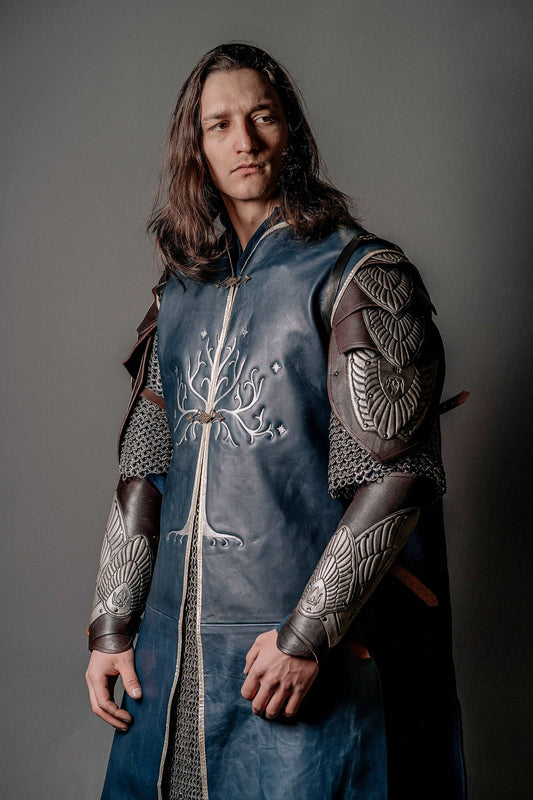
A vest, overdress, light coat, or decorative shoulder piece can define the character, but it should not trap the entire outfit beneath it. Use closures you can operate without assistance and decide where the removed garment will be stored.
Limit the palette to a few coordinated colors so the reduced outfit still looks intentional. Natural linen, black, brown, muted green, burgundy, and gray can work together without requiring many heavy pieces.
Browse the SokolArmory costume collection for layered examples, then use the broader collection directory to compare separate clothing, belts, boots, and armor. Verify each live description because product photos may show accessories that are not included.
Use belts without restricting cooling
A belt organizes the silhouette and provides storage, but it should not compress the waist or prevent the tunic from moving. Test it after eating, sitting, and walking. Add only the pouches needed for phone, identification, payment, keys, medication, and other essentials.
Keep water accessible. If the costume has no practical pouch or bottle holder, use an organizer-approved bag rather than hiding water somewhere difficult to reach.
Treat armor as an optional warm layer
Leather and structured panels can retain heat. Test armor over the complete clothing system and remove it during breaks if the event permits. Never tighten a cuirass or shoulder piece enough to restrict breathing just to reduce movement.
Check the neckline, underarms, shoulders, sides, and waist after ten minutes of activity. If you feel numbness, dizziness, unusual weakness, or restricted breathing, stop, move to a safe cooler area, and remove the affected layer.

Choose footwear for heat and terrain
Many Faires involve uneven ground and long distances. Break boots in before the event and test them with the same socks and insoles you will wear. Pack spare socks, blister care, and comfortable backup shoes.
Dark tall boots may become hot in direct sun. Take seated breaks, change damp socks, and check your feet before discomfort becomes an injury. Keep footwear separate from clean clothing during travel.
Protect the head and skin without blocking awareness
Use event-appropriate sun protection and reapply it according to the product directions. A hat, hood, or head covering should not block peripheral vision or hearing. Secure loose fabric so it cannot catch on props, branches, or other guests.
Make shade part of the schedule instead of waiting until you feel unwell. Plan regular water and cooling breaks, especially when wearing dark clothing or leather components.
Measure for the layers you will actually wear
Take measurements over the intended base garments when the maker requests that method. Use the SokolArmory measurement guide, record the clothing worn during measurement, and do not add your own allowance unless instructed.
A garment that fits over a thick cold-weather shirt may be unnecessarily loose over a summer base. Confirm the live size guidance and selected option for each product.
Run a warm-weather dress rehearsal
Wear the full outfit outdoors in comparable conditions when practical. Walk for twenty minutes, stand still, sit, use stairs, reach for water, and access every essential item. Then remove the heaviest layer and confirm that the simplified costume still works.
Photograph the front, back, and sides after movement. Look for shifted belts, twisted hems, trapped fabric, and dark layers that visually merge. Correct one issue at a time and repeat the test.
Warm-weather Ren Faire checklist
- Current forecast, venue map, and organizer rules.
- Breathable shirt or tunic with unrestricted movement.
- Clean spare base layer and extra socks.
- Removable vest, cloak, coat, or armor component.
- Belt and pouches tested while sitting and walking.
- Accessible water, identification, payment, and medication.
- Broken-in footwear and comfortable backup shoes.
- Sun protection and a head covering that preserves vision and hearing.
- Scheduled shade and cooling breaks.
- A complete outdoor movement and heat test.
- Separate bags for damp clothing and dirty footwear.
Warm-weather costume planning is mainly about adjustment. Build a strong base outfit, add only the layers that improve the character, and keep a clear plan for removing them safely as the temperature rises.




User Name 2 Days ago
Lorem ipsum dolor sit amet, consectetuer adipiscing elit. Aenean commodo ligula eget dolor.