

Real-World Aragorn Costume Styling From Our Heroes
Aragorn costume customer photos are useful because they show what happens after separate garments become one outfit. A product image can explain construction, but a real event or portrait photo reveals proportion, color balance, hair, posture, footwear, and the way layers settle on the body.
Browse SokolArmory's Our Heroes gallery for finished looks and the customer feedback page for individual buyer experiences. Treat each photo and review as one person's result. It cannot promise the same fit, comfort, or event approval for everyone.
The supporting images in this guide are verified SokolArmory product photographs, not customer submissions. They are included to make specific construction and styling choices easier to see.
Start with the silhouette, not the accessories
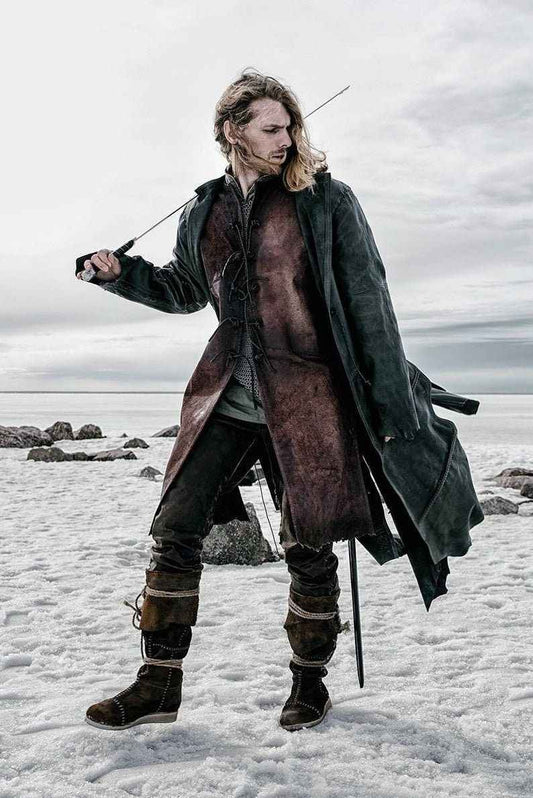
An Aragorn-inspired ranger look usually reads through a long vertical line: a coat or duster over a tunic and vest, narrow lower-body layers, practical boots, and restrained leather details. The outer layer carries most of the silhouette, so decide its length and volume before buying a belt, gloves, or prop.
Look at customer photos from a distance first. Ask where the eye lands, how far the coat extends, and whether the shoulders appear broad, relaxed, or armored. Then inspect the smaller details. This prevents a decorative buckle or bracer from controlling a costume that should be defined by the full outline.

Choose the ranger or royal direction
Two broad approaches can use related pieces without looking identical. A ranger direction favors dark, weathered outer layers, practical handwear, muted cloth, and an uneven surface finish. A royal direction can use cleaner lines, stronger blue, brighter metal, and more structured shoulder or forearm elements.
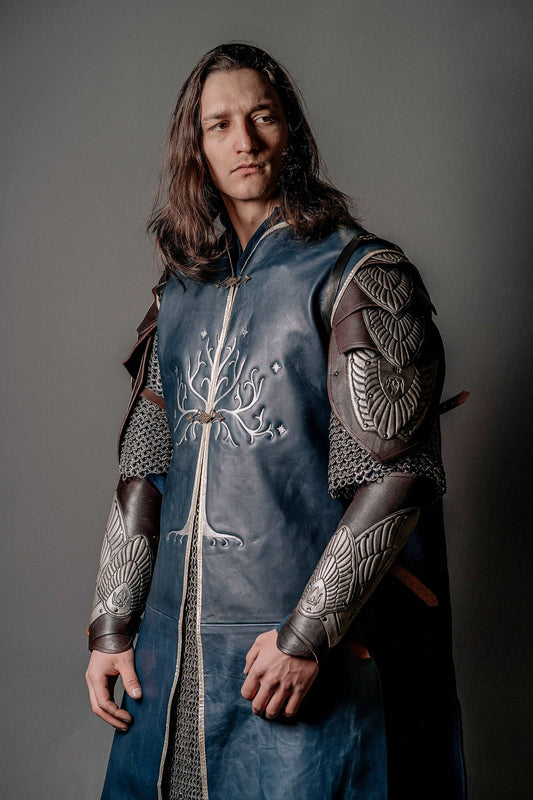
The second product photo shows a dark blue leather vest with a silver tree motif, brown layered shoulder pieces, chainmail sleeves, and matching forearm armor. The color placement creates a formal center while the brown and silver frame it. This is a useful example of a royal look built around one clear chest piece.
Do not combine every ranger and royal cue at the same strength. Choose one direction as the base, then borrow one or two details from the other. A weathered duster can support a refined clasp; a blue formal vest can still sit beside darker, worn leather.

Build the costume in a fixed layer order
Lay out the outfit in dressing order: base shirt or tunic, vest, trousers, coat, belt, bracers, gloves, boots, and any permitted prop. This makes fit problems easier to diagnose. If the coat closes over the vest but binds over a thicker tunic, the issue is the stack, not necessarily the coat alone.
The active Aragorn duster costume listing names a leather coat, leather vest, bracers, linen tunic, leather pants, and boots. It also states that the listed parts can be ordered separately. Confirm the selected option, included pieces, and live availability before ordering because a full-costume option and a separate component are not interchangeable.
Use the broader costume collection to compare silhouettes, but keep a written list of what your version actually needs. A complete look does not require every photographed accessory.
Control a dark color palette
Black, brown, charcoal, and deep green can collapse into one flat mass, especially indoors. Separate the layers through value and texture. A slightly lighter brown vest can remain visible beneath a black coat. Matte cloth can distinguish itself from worn leather. Small metal details can mark closures without becoming the main theme.
Check the outfit in daylight and under the lighting expected at the event. Phone cameras often brighten shadows automatically, so also look at the costume with your eyes from several steps away. If the torso loses all structure, adjust one layer rather than adding several bright accessories.
Let the duster establish movement
The back view of the black duster shows a center seam, a shaped waist line, long panels, and a rear opening. Those features matter because the coat must move around the legs and settle again when the wearer stops. A dramatic hem that photographs well while standing still can still become awkward on stairs or in a crowded venue.
Test the coat while walking, sitting, turning, and climbing a few safe steps. Check that the hem clears the ground and the back opening does not catch on belts or equipment. If you plan to wear a cloak or shoulder strap, repeat the test with it attached because added weight can pull the coat out of position.
Fit bracers as part of the sleeve system
Bracers should be tested over the exact sleeves and any mail layer planned for the costume. A forearm piece that fits over a bare wrist may press against a thick cuff or restrict the elbow when combined with another layer. Fasten the bracers, bend both arms, and then handle the items you expect to carry.
The cover photo shows shaped brown leather forearm armor beside chainmail sleeves and a blue leather vest. The close view makes the overlap easy to inspect: the bracer ends below the elbow, the mail remains visible, and the colors repeat the shoulder treatment. The practical question is not how imposing the bracer appears; it is whether the full sleeve system permits normal wrist and elbow movement.
Use weathering consistently
The live costume description identifies natural leather and a deliberately weathered finish. In styling terms, weathering works best when the coat, vest, boots, belt, and bracers feel as though they belong to the same history. One heavily worn piece beside several pristine pieces can appear accidental.
Consistency does not require damaging new gear. Choose compatible surface finishes, keep the color range controlled, and follow the maker's care directions. Normal wear can develop over time. Do not apply an unfamiliar dye, abrasive, conditioner, or heat treatment before an event.
Test the full costume instead of the hero pose
A customer portrait may capture one strong stance, but your costume must also survive ordinary movement. Wear the complete stack for at least thirty minutes. Walk, sit, reach, turn, and kneel if the event requires it. Check the collar, shoulders, elbows, waist, knees, and ankles for pressure or restriction.
Load the belt and pockets with their actual contents. Make sure the coat does not trap a pouch, the bracers do not hit the gloves, and the boots remain comfortable with the planned socks. Verify current event rules for replicas, armor, and footwear before arrival.
Photograph your own finished version
Take full-length front, side, and back photos in neutral light, then add one walking image and one close view of the closures. These photographs help you spot twisted straps, uneven hems, and a color imbalance that a mirror can hide.
If another person appears in the image, get permission before publishing it. Do not attach a customer's name, order details, or social profile without clear consent. A useful gallery celebrates the finished work without turning a private order into public information.
Aragorn-inspired styling checklist
- Choose a ranger or royal direction before adding accessories.
- Define the silhouette with the coat, duster, or main vest.
- Write down the complete dressing order.
- Separate dark layers through texture and value.
- Measure over the exact tunic and vest you plan to wear.
- Test the coat on stairs and during a long stride.
- Fit gloves and bracers together.
- Keep weathering consistent across the outfit.
- Run an extended movement test with loaded pockets.
- Photograph the front, side, back, and walking fit.
The strongest lesson from real-world costume photos is restraint. A convincing Aragorn-inspired look depends on a clear long silhouette, a controlled dark palette, and layers that work together in motion. Start with those decisions, then let the smaller leather details support the character.


User Name 2 Days ago
Lorem ipsum dolor sit amet, consectetuer adipiscing elit. Aenean commodo ligula eget dolor.