
How to Choose Medieval Boots for LARP and Ren Faire
The right medieval boots should match the event, the ground, and the rest of your kit before they match a reference image. For a day at a Ren Faire, traction and walking comfort usually matter more than an exact historical silhouette. For LARP, you also need secure closures, room for the planned leg layers, and a shaft that does not interfere with kneeling or running.
Start by choosing the sole and shaft height, then check measurements, closures, materials, and care. Do not buy from the photograph alone: read the current product options and confirm any measurement process that is not clear on the live page.
Choose the sole for the ground you will use
Ask where most of the day will happen. Packed dirt, wet grass, gravel, pavement, and indoor floors put different demands on footwear. A sole that looks discreet in a photograph may not be the one you want for hours on a modern fairground.
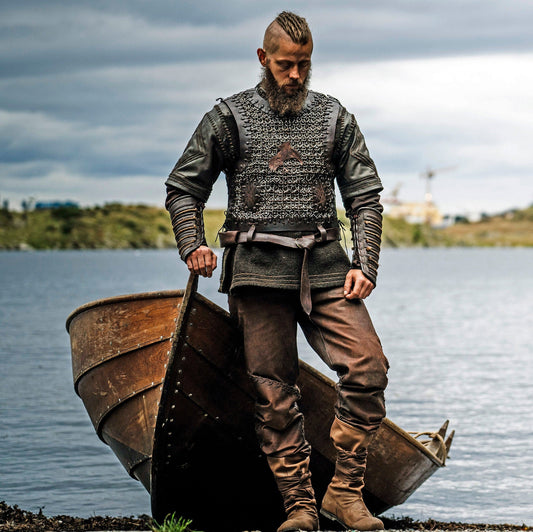
A soft sole gives a low-profile shape and more direct ground feel. It is a strong visual choice for a simple early-medieval or Viking-inspired outfit, but the wearer should be comfortable with the surface underfoot. The active SokolArmory soft-sole medieval boots are listed as natural leather with a soft sole and are currently offered in several colors and sizes.
A thicker or molded rubber sole separates the foot from rough ground and is usually the more practical starting point for mixed modern surfaces. The Medieval Black Boots “Ranger”, SKU ET-1847555294, are currently described as natural leather with a molded rubber sole, tread, and an anti-slip coating. No sole can make every wet or uneven surface safe, so walk deliberately and follow the event's site guidance.

Match shaft height to movement and costume layers
An ankle-height boot is easy to pair with leg wraps, loose trousers, or simple lower-leg layers. It also leaves the calf free. A tall boot creates a stronger silhouette and protects more of the trouser leg, but it adds measurement points and can press behind the knee if the shaft is too high.
Put on the trousers, socks, wraps, or padded layers you expect to wear. Sit in a low chair, kneel, take a deep lunge, and climb a step. The top edge should not dig into the back of the knee. The shaft should stay secure without crushing the calf or forcing fabric into a hard ridge.
Check how the trouser hem will be handled. Some outfits look clean with trousers tucked inside. Others need a boot worn under a wider leg. If you plan to add wraps or gaiters over the boot, include that thickness in the fitting conversation and make sure the closures remain accessible.
Measure the foot and the leg, not only the usual size
A familiar shoe size is a starting point, not a complete fit description. Foot length does not capture the ball, instep, heel, ankle, or calf. Tall boots add even more variables because the shaft has to match the lower leg as well as the foot.
The measurement list on SokolArmory's soft-sole boot page asks for foot length, circumference around the ball, heel circumference, instep circumference at the highest point, ankle circumference, calf circumference, and US size. Follow the current instructions for the exact product you select, and use the SokolArmory measurement guide rather than adding your own allowance.
Measure both feet while wearing the intended socks. If the measurements differ, report both instead of averaging them. Keep the tape level and snug without pulling it into the skin. For a tall shaft, record the height from the floor at the point requested by the maker. If the product page does not explain a needed dimension, ask before ordering.

Compare closures by adjustment and speed
Laces provide adjustment across several points and can accommodate modest changes in socks or layers. They take longer to tie and may need to be tucked so loose ends do not catch. Buckles are easy to inspect and repeat, but the spacing between straps determines where the boot can tighten.
A wide cuff changes the silhouette and can disguise the top of the shaft. It does not replace a secure fit lower on the boot. The Ranger design uses side lacing beneath a broad folded cuff. By contrast, SokolArmory's active black leather high boots with buckles use four visible buckle closures and are listed with a thick sole.
Before an event, close the boots exactly as you will wear them and walk for a sustained period. Watch for heel movement, pressure across the instep, rubbing at the ankle, or a buckle that lands on a sensitive point. A closure should hold the boot without becoming the only thing preventing the foot from sliding.
Decide how much weathering fits the character
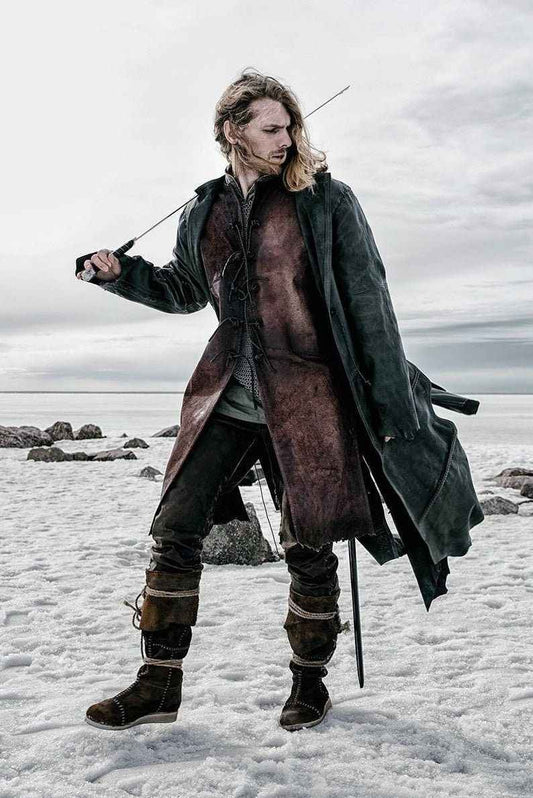
Finish affects the way boots sit within the costume. Smooth black leather works with a ranger, fantasy military, or polished court look. Brown leather and visible lacing can suit a rougher traveling or mercenary silhouette. Artificial aging can help footwear blend with a worn costume, while a clean finish gives you more control over where wear develops.
Compare the boot with the belt, bracers, and armor in the same light. Leather colors do not have to match perfectly, but their undertones and finish should look intentional. If the rest of the costume is heavily weathered, untouched boots can draw more attention than expected. If the costume is formal, extreme distressing may work against it.
The current medieval leather high boots listing describes natural leather, a thick sole, and color options including brown, black, and red. Use the live option selector rather than assuming the photographed color is the only one available.

Read the live listing for materials and options
Product photographs show shape and styling, but the written description and selector carry the buying details. Check the named material, sole type, pair quantity, color, size, and whether the item is standard or made to measurements. Save a copy of the selected option and any written confirmation that affects your order.
The Ranger listing currently says the boots are made to individual measurements and instructs the buyer to select a usual size before receiving measurement directions. At the same time, the live Shopify selector displays a single “Default Title” option rather than visible sizes. Because those two parts of the page do not present the process in the same way, confirm how to submit your measurements before checkout.
Also separate product claims from styling props. The Ranger page states that shown accessories are for display and are not included. Apply that same discipline to every listing: identify the exact item and option rather than assuming that trousers, wraps, greaves, or other photographed pieces come with the boots.
Test boots with the complete kit
Do not wait until the event to combine new boots with the costume. Test them with the actual socks, trousers, wraps, belt load, and any armor that changes your stride. Walk on stairs and a few representative surfaces where it is safe to do so. Sit, kneel, turn, and take a long step.
Look for problems that appear only after layering: fabric gathering inside the shaft, a wrap sliding over a cuff, a buckle catching a long hem, or armor changing how far you can bend. Make one change at a time so you know what solved the issue.
If the event involves combat rules or athletic movement, footwear still has to meet the organizer's requirements and your own needs. A costume label is not a safety certification. Check the rules for your specific game or venue and choose a model appropriate to the activity.
Use care instructions that match the leather
The Ranger listing advises removing dirt with a soft damp cloth, allowing the boots to air-dry away from direct heat, applying leather conditioner periodically, and storing them in a cool, dry place. Those are the current instructions for that product. For another finish or color, follow its listing or ask SokolArmory before using a cleaner, polish, waterproofing treatment, or conditioner.
Test any care product in a hidden area first. Do not force-dry wet leather beside a heater. After an event, remove surface dirt, let the boots dry fully, and inspect laces, buckles, stitching, and soles before storage. That makes small maintenance needs easier to find before the next wear.
Final medieval boot buying checklist
- Choose a soft, thick, or molded rubber sole for the surfaces you expect.
- Check that the shaft height permits sitting, kneeling, and climbing steps.
- Measure over the socks and layers you will actually wear.
- Report both feet if their measurements differ.
- Compare laces, buckles, and cuffs for adjustment and dressing time.
- Verify the live material, color, size, and included-item information.
- Ask how measurements are submitted if the selector and description differ.
- Test the boots with the complete costume before the event.
- Follow product-specific cleaning and drying guidance.
To choose medieval boots well, begin with the sole and the terrain, then work upward through fit, shaft height, closures, and appearance. A convincing silhouette matters, but a boot that stays secure through walking, sitting, and costume changes will serve the event far better than one selected from a single photograph.


User Name 2 Days ago
Lorem ipsum dolor sit amet, consectetuer adipiscing elit. Aenean commodo ligula eget dolor.