
What Men Can Wear to a Renaissance Faire
A good men's Renaissance Faire outfit is easy to recognize, comfortable for a full day, and practical for the weather. You do not need armor or an elaborate character on your first visit. Start with a tunic, simple trousers, a belt, and footwear you can walk in, then add one or two pieces that establish the look.
The best choices depend on the event, not on a universal costume formula. Check the faire's published rules, expected weather, and ground conditions before deciding what to wear.
Start with the faire, season, and character
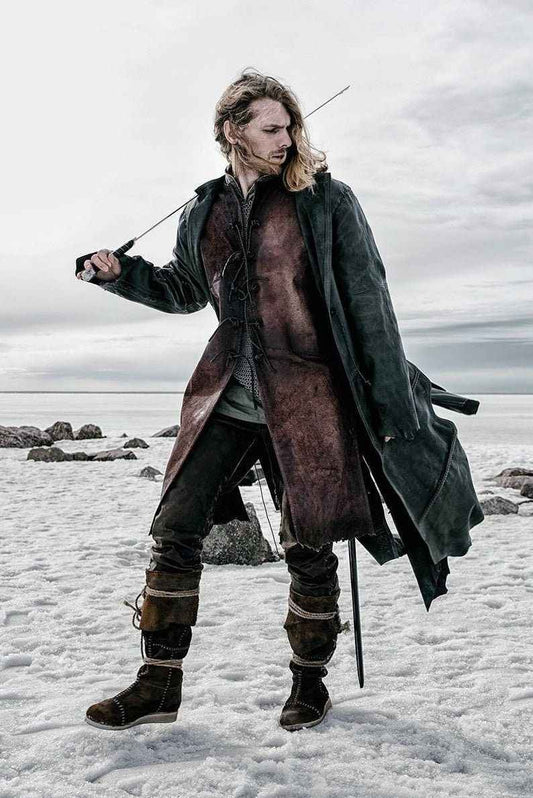
First decide how specific you want the outfit to be. A general medieval traveler gives you room to combine plain garments. A merchant, guard, ranger, noble, or fantasy character needs a clearer palette and a few identifying details. Write a one-sentence brief before shopping, such as “a practical traveler in gray, brown, and muted blue.” That sentence makes it easier to reject pieces that do not belong together.
Then look at the conditions. An outdoor summer faire calls for breathable base layers and a way to remove heavier pieces. A cool autumn event may support a vest, cloak, or coat. Uneven grass and long walking distances should influence footwear more than the appearance of a boot in a studio photograph.
Read the event's current costume and prop rules. Some fairs welcome modern visitors without costumes; others set restrictions for masks, weapons, realistic props, or armor. The organizer's rules take priority over a product's suggested uses.

Build the outfit from a tunic
A tunic creates a period-inspired silhouette with very little effort. For a beginner outfit, choose a length that works over your trousers and leaves enough room through the shoulders and chest. Raise your arms, reach across your body, sit, and take a long stride before adding a belt or outer layer.
The in-stock Warlord medieval tunic, SKU STOCK-4548, is a finished gray-blue textile garment in one fixed size. Its live listing gives a 48-inch chest, 40-inch waist, 23-inch front length, and 29-inch sleeve length. Only the single tunic is included; the other clothing and accessories shown or imagined as part of a complete costume are separate.
Those are garment measurements, so compare them with a similar garment that already fits rather than with a bare-body measurement alone. The product is not offered with custom sizing. If any listed dimension is close to your own garment measurement, ask SokolArmory about fit before ordering.
Use simple trousers as a quiet base
Choose trousers that let you walk, sit, and climb stairs without pulling at the knee or seat. Solid black, brown, charcoal, olive, or tan usually works better than a modern pattern. The waistband will often sit under a belt, vest, or long tunic, so prioritize comfort and freedom of movement.
You may already own suitable trousers. Plain drawstring pants or workwear without prominent modern branding can be a sensible first-fair choice. Tuck the hem into boots only if the combination stays comfortable; excess fabric inside a boot shaft can create pressure during a long day.

Choose fabric and layers for the weather
The active medieval linen tunic offers a more fitted visual reference: a gray garment with brown edging and a laced front, photographed on a model. The live page describes one handmade tunic made from natural fabric. Treat that product photograph as styling guidance, not as a promise that every tunic has the same cut or color.
Wear the lightest comfortable layer next to the skin, especially in heat. If you add a vest, cloak, or coat, make sure it can be removed without leaving the base outfit incomplete. Keep the number of layers modest until you know how your local faire feels at midday.
Color does much of the visual work. Pick two main colors and one accent rather than using every earth tone at once. Repeating the same brown in a belt, boot, or trim can tie together garments purchased at different times.
Add one belt with a clear purpose
A belt can shape a long tunic and carry a small pouch, but it should not hold the outfit together by force. Put on every torso layer before deciding where the belt sits. Check that it does not compress your ribs when seated or pull the tunic into a thick bunch at the back.
The Warrior wide belt is an example of a broad statement piece with decorative leather panels and metal accents. Its live listing identifies one belt, handmade and sized to the customer's measurements. A wide belt draws attention to the waist; if you choose one, keep nearby accessories quieter.
For a first outfit, one functional belt is usually enough. Place a pouch where you can reach it without twisting, and sit in a normal chair to make sure the contents do not press into your hip or abdomen. Do not hang a heavy prop from a costume belt unless the event permits it and the belt was designed for that load.

Decide how much armor belongs in the look
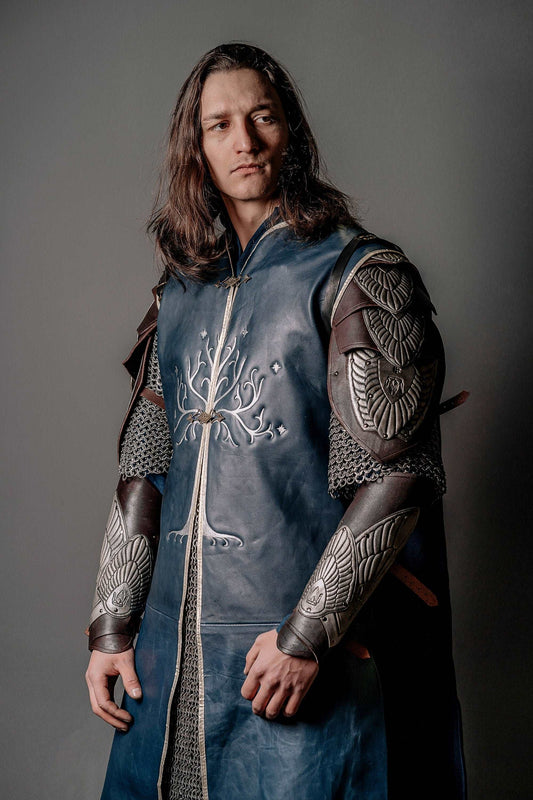
Armor is optional at a Renaissance Faire. A traveler, artisan, musician, merchant, monk, or courtly character may need none. If the outfit concept calls for a guard or warrior, begin with a limited accent such as bracers or a leather shoulder piece rather than covering every layer.
Wear the complete base outfit when fitting any rigid or structured piece. Check the neck, underarms, elbows, and waist while walking and sitting. Costume armor is not automatically protective equipment, and a listing's use for cosplay or LARP does not replace the safety rules of a particular event.
Keep visual balance in mind. An ornate belt, heavy bracers, and a decorated cuirass can compete for attention. One detailed piece against simpler garments often reads more clearly and is easier to wear.
Choose footwear for hours of walking
Footwear is where comfort should win. Check the forecast and determine whether the faire uses grass, mud, gravel, pavement, or indoor floors. Break in any new pair before the event and test it with the socks and trouser hem you plan to wear.
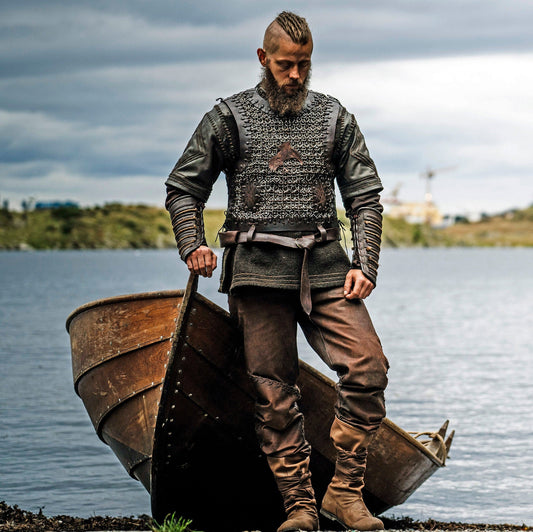
The ready-to-ship Ragnar black leather boots are one pair in EU size 40. The live listing describes black leather and a fixed size, with no custom sizing included. Their tall, plain shafts give a strong costume silhouette, but the published size and your actual walking comfort should decide whether they are suitable.
If costume boots are not right for your feet, clean dark walking shoes can be the wiser beginner choice. Long hems, gaiters, or boot covers may reduce the modern appearance, but they should never hide a trip hazard or interfere with traction.
Measure the clothes you already wear
Product labels such as small, medium, or large are not enough for a reliable costume fit. Use the maker's measurement guide and compare each listing with the type of measurement it requests. Body circumference and finished-garment circumference are different numbers.
For an in-stock fixed-size item, lay a comparable garment flat and measure it consistently. Confirm chest, waist, sleeve, shoulder, and length where relevant. Include the planned underlayers when checking outer garments. For footwear, use the size system and any dimensions provided on the live page rather than converting by memory.
Run a full-outfit comfort test
Dress completely at least a few days before the faire. Wear the shirt or tunic, trousers, belt, pouch, footwear, and every optional layer. Walk for 30 minutes, use stairs, sit, crouch, reach overhead, and carry what you expect to bring.
Look for interactions between pieces. A belt may pull a tunic upward. A pouch may swing into the thigh. A boot shaft may catch the trouser fabric. A cloak may press against a shoulder strap. Fix those problems while you still have time to change the arrangement.
Also plan for modern necessities. Water, sun protection, medication, identification, and a phone matter more than perfect visual accuracy. Put them in an accessible pouch or bag that complies with venue rules.
A beginner men's Renaissance Faire outfit checklist
- Read the current event rules, schedule, weather forecast, and terrain notes.
- Choose a simple character idea and a two-color palette with one accent.
- Start with a comfortable tunic and plain trousers.
- Add one useful belt and a small pouch if needed.
- Choose broken-in footwear for the actual ground conditions.
- Add a vest, cloak, bracers, or armor only when it supports the character and remains comfortable.
- Compare live product measurements with clothes that already fit.
- Test the complete outfit while walking, sitting, and climbing stairs.
The SokolArmory costume collection can help you compare complete silhouettes and individual components. Use those photographs to refine your direction, then verify the exact live option, included pieces, measurements, and availability before checkout.


User Name 2 Days ago
Lorem ipsum dolor sit amet, consectetuer adipiscing elit. Aenean commodo ligula eget dolor.