

Ready-to-Ship vs. Made-to-Measure Costumes
The choice between a ready-to-ship costume and a made-to-measure costume comes down to three practical questions: Do the listed measurements already fit you? How fixed is your event date? Do you want the exact photographed configuration, or do you need the maker to build around your body and layer plan?
Ready-to-ship is the straightforward option when the finished piece matches your measurements and you are comfortable with its existing color, size, and included parts. Made-to-measure is the stronger choice when fit across several layers matters more than immediate availability. Neither format is automatically better; the right one is the format with fewer unresolved risks for your specific event.

Start with the decision that cannot change later
Choose ready-to-ship when all four statements are true:
- The published garment measurements are compatible with clothing that already fits you.
- The listing clearly identifies the exact item, size, color, and included parts.
- You can accept the finished design without requesting structural changes.
- You have checked the current dispatch and delivery information for your destination.
Choose made-to-measure when one or more of these conditions apply:
- Your proportions do not align well with a single standard size.
- The costume must fit over a specific shirt, tunic, padding layer, or under-armor garment.
- Several fitted components need to line up at the waist, wrists, knees, or shoulders.
- You want personalization that the chosen listing actually offers.
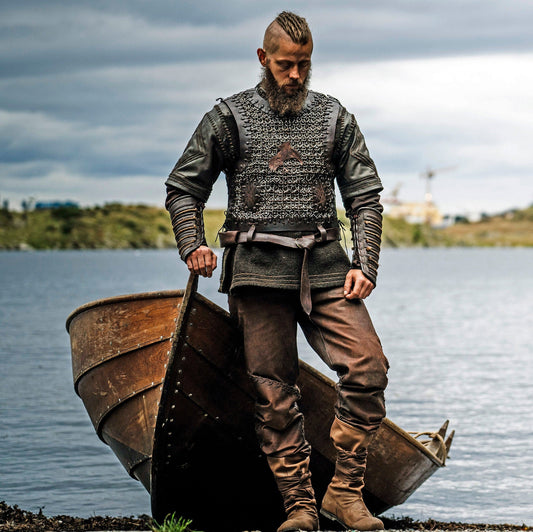
If both options could work, compare the consequences of a poor fit. A loose cloak may be easy to manage, while fitted pants, tall boots, bracers, or a shaped cuirass leave much less room for error.
What ready-to-ship means in a live SokolArmory listing
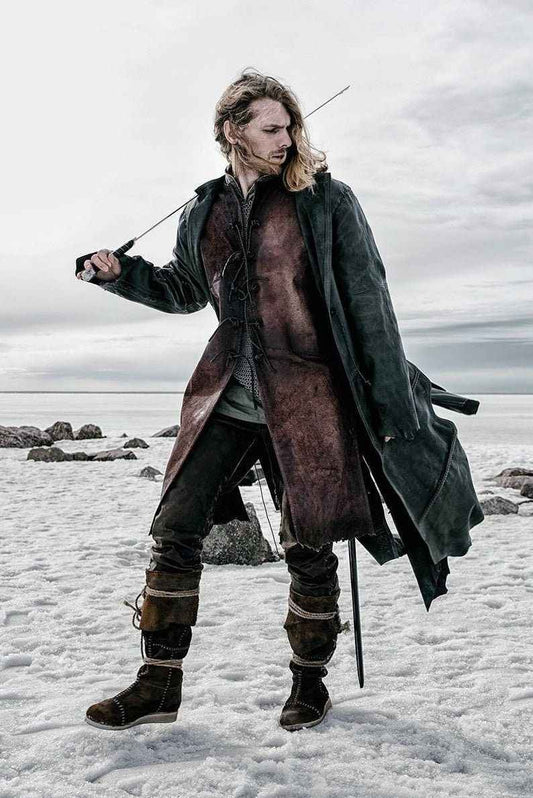
The current in-stock layered black costume is a useful example because the listing is unusually specific. It describes one finished item in size L, says that the photographed piece is the item for sale, and identifies textile with leather accents. Custom sizing is not included.
The listing supplies measurements for each major garment rather than relying only on the letter size. Its pants are listed with a 37.0-inch waist and 39.4-inch hips. The shirt chest is 39.4 inches, the vest chest is 39.4 inches, and the cloak chest is 43.3 inches. Those numbers are more useful than “L” because costume layers from different brands can use the same size label for different dimensions.
A finished costume also makes the visual result easier to judge. You can inspect the actual color, silhouette, and layer arrangement before buying. The tradeoff is equally clear: if the measurements or configuration do not work, the item does not become made-to-measure simply because it is handmade.

What made-to-measure changes
Made-to-measure begins with an existing design but adjusts the fit from the measurements requested for that product. SokolArmory’s measurement page says customers select their usual clothing or shoe size when ordering and receive measurement instructions by email after payment.
That process creates an opportunity to account for body dimensions and the layers worn under the costume. It also creates responsibilities for the buyer. You need to follow the requested method, record numbers carefully, and answer follow-up questions. Extra ease should not be added unless the instructions request it; doing so can shift a fitted piece away from the intended joints.
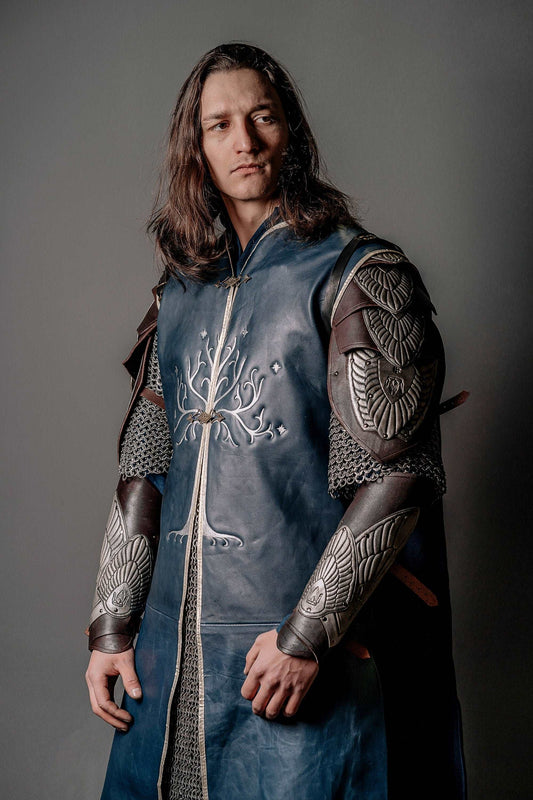
The active brown leather cuirass with pauldrons provides a concrete product example. Its listing says the piece is made according to individual measurements and can be personalized on request. The written description identifies one cuirass with pauldrons, so a buyer should not assume that the shirt, cloak, belt, or other styling pieces shown elsewhere are included.
Compare fit using the clothing you already own
For ready-to-ship clothing, compare the listing with a similar garment laid flat or measured using the same method. Body measurements and garment measurements are not interchangeable. If a page does not make the method clear, ask before ordering.
Work through the costume from the inside out:
- Identify the base shirt, trousers, socks, and footwear you will actually wear.
- Measure a comparable garment that fits comfortably.
- Check the chest, waist, hips, sleeve, garment length, and any glove or belt dimensions supplied.
- Allow for the planned layers only according to the seller’s measurement instructions.
- Flag asymmetry, thick padding, mobility needs, or unusual footwear before production begins.
A single close measurement deserves attention. A costume can match at the chest but fail at the shoulders, hips, calf, or sleeve. Ask about the specific point instead of treating the size label as a guarantee.
Compare timing without relying on category labels
“Ready to ship” describes the production state, not the date the parcel will reach you. Confirm the current handling information, shipping service, customs requirements, and destination estimate on the live listing. Build in time to try on the costume, resolve a delivery problem, and make minor styling adjustments before the event.
Made-to-measure adds communication and production stages. The SokolArmory custom-order page outlines an initial question-and-quote stage, measurement review, material discussion, progress photos, and final photos for approval before shipping. Those steps are useful, but they also mean that a fixed convention or performance date should be disclosed before committing to the order.
Do not carry a production estimate from one product onto another. Order volume, materials, complexity, and the selected shipping method can change the schedule. Use the current product page and written confirmation for the specific order.
Compare customization and included parts
Ready-to-ship works best when you want the finished item as presented. Ask only about changes that the seller confirms are available; altering a completed garment may not be practical. Confirm whether belts, gloves, boots, armor, props, and base layers are included or are there for styling.
Made-to-measure does not mean every design change is included. Separate fit adjustments from personalization. Fit concerns include body dimensions, sleeve length, and room for underlayers. Personalization may involve color, finish, engraving, component choices, or another design detail, but only where the listing or maker explicitly offers it.
Write a simple order summary before paying: selected product, option, included components, requested personalization, measurement method, intended underlayers, event date, and destination. That record makes it easier to spot an assumption before it becomes part of the finished costume.
Test comfort and movement for the intended event
A costume that looks correct while standing still may behave differently after an hour of walking or sitting. When a ready-made piece arrives, test it with the complete base layer. Raise both arms, take a long step, sit in a normal chair, climb stairs, turn at the waist, and check the range of motion at the wrists and neck.
For made-to-measure, describe important movements before production when the design is fitted or rigid. A stage performer, convention attendee, and LARP participant may need different clearance even when their body measurements are identical. The product’s intended use and the organizer’s current rules should guide the final setup.
Ready-to-ship vs. made-to-measure buying checklist
- Confirm that the product is active and the selected option is available.
- Read the written list of included parts instead of relying on photographs.
- Compare actual measurements, not only the size label.
- Identify every garment or pad that will sit under fitted pieces.
- Separate required fit changes from optional personalization.
- Confirm the current production, dispatch, shipping, and customs information.
- Share a fixed event date before ordering and keep a reasonable buffer.
- Run a complete movement test as soon as the costume arrives.
Use the SokolArmory costume collection to compare current designs, then read the exact listing for the option you intend to buy. A ready-to-ship costume is the efficient choice when the finished measurements already work. A made-to-measure costume earns its extra steps when fit, layering, and requested details are central to the result.


User Name 2 Days ago
Lorem ipsum dolor sit amet, consectetuer adipiscing elit. Aenean commodo ligula eget dolor.