

When to Start Planning a Made-to-Measure Halloween Costume
A made-to-measure Halloween costume needs more planning than an off-the-rack outfit. The maker needs time to confirm the scope, collect measurements, produce the pieces, ship the order, and leave you enough time for a complete fitting. Start with the event date and work backward instead of choosing a costume first and hoping the calendar works.
For an October 31 event, early summer is a comfortable time to define the character and budget. July or early August is a practical time to finalize a complex made-to-measure order when the current listing shows production measured in months rather than days. Exact timing changes with the product, order volume, destination, and selected shipping method, so the live estimate and a direct deadline confirmation matter more than a generic rule.
Count backward from the date you must wear it
Use the first event day, not Halloween night, as the deadline. A convention, photo shoot, wedding, or LARP may happen one or two weekends earlier. Add a private fitting date at least several days before that event. Your working deadline is the day the complete costume must be in your hands and ready to test.
Then list every stage: concept approval, product selection, measurements, production, shipment, customs if applicable, fitting, and small adjustments. Do not overlap stages that depend on one another. You cannot perform a useful movement test until the correct boots, trousers, coat, and armor are together.

Twelve or more weeks before: define the complete look
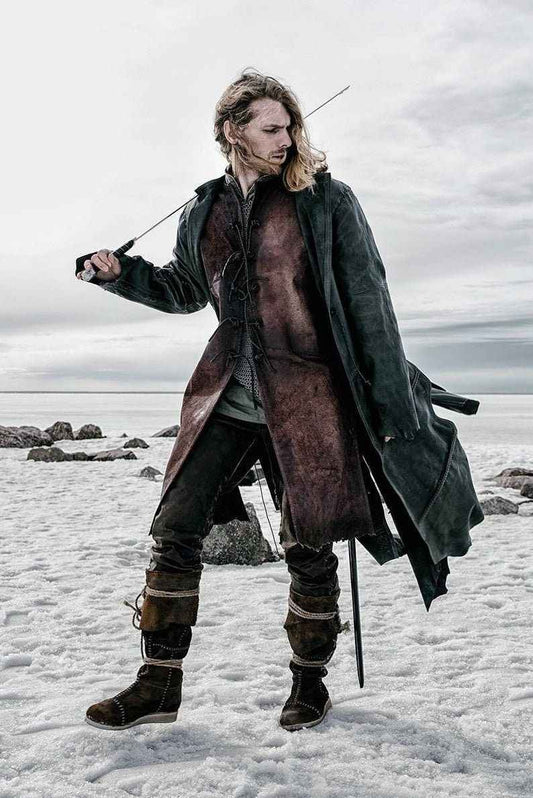
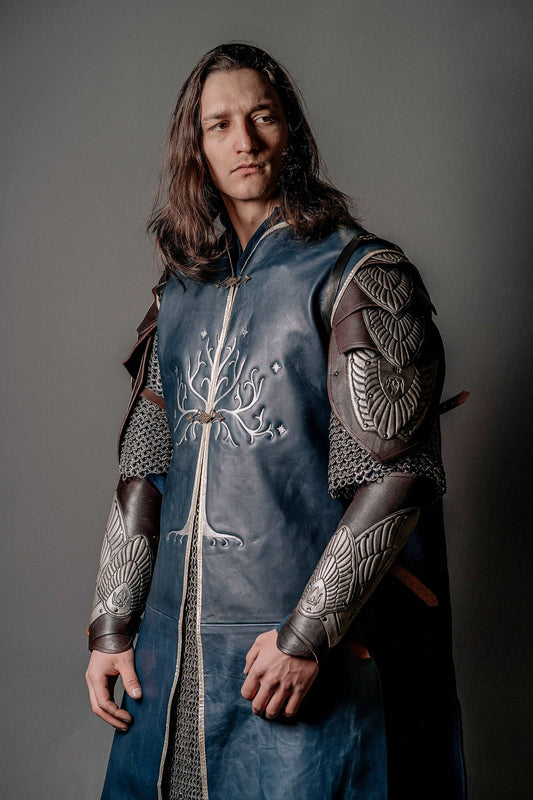
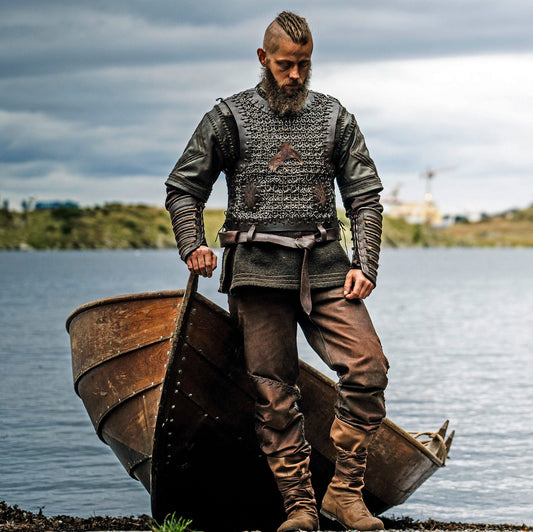
Choose one reference direction and decide how complete the costume needs to be. Write down the required pieces, optional pieces, and items you already own. A layered ranger outfit may include a coat, vest, tunic, pants, bracers, boots, belts, and display accessories, but the product photograph does not automatically define what is included.
The live Aragorn duster costume listing currently names a leather coat, leather vest, bracers, linen tunic, leather pants, and boots. It says individual parts can be ordered separately by messaging SokolArmory. That makes the product useful for planning either a full set or a staged purchase, but you still need to confirm the selected option at checkout.
Set a total budget that includes the costume, shipping, possible import charges, underlayers, safe props, storage, and event travel. Decide whether the same outfit must work at more than one event. A reusable base costume may justify a different selection than a single indoor party.
Eight to twelve weeks before: confirm scope and timing
Open the current product page and verify the production estimate, delivery estimate, available options, and included pieces. At the time this guide was checked, the Aragorn listing stated production of one to two months depending on orders in progress and standard delivery of 18–24 days. Those periods can consume most of a twelve-week window, especially if questions or measurement corrections delay the start.
Send the seller your event date, destination country, selected product or components, and any customization request before assuming the deadline is feasible. A shop estimate is not the same as a guaranteed event arrival. If the available window is too short, reduce the scope, choose an in-stock piece, or plan a different outfit.
Confirm color and material expectations. The live listing describes natural leather, vegetable-dyed coloring, artificial weathering, and possible variation between small dye batches. Screen color is not a precise material sample, so allow room for natural variation rather than building the entire palette around an exact pixel value.

After ordering: submit measurements promptly
Do not let a paid order wait in your inbox. Read the maker's instructions and take measurements with the intended base layers. Use the SokolArmory measurement guide instead of substituting a method from another shop. Ask which values are body measurements and which come from a garment.
Measure twice and record the date, units, and clothing worn. Use either inches or centimeters consistently. If another person can help, have them hold the tape level while you stand naturally. Do not tighten the tape to make a smaller number and do not add your own ease unless the maker requests it.
Tell the maker about unusual layering, tall boot shafts, armor under a coat, mobility requirements, or a planned change in body size. These details can affect how the finished pieces work together. Keep the conversation and measurement list in one place so questions are answered quickly.
Four to eight weeks before: build the supporting kit
While production is underway, prepare everything that does not depend on the finished costume. Break in event footwear if appropriate, assemble neutral underlayers, choose a storage bag, and check venue rules for props. Buy makeup and wig supplies early enough to test for comfort and color transfer.
Do not purchase visible accessories solely because they appear in a product photo. The Aragorn listing says shown display accessories are not included. Compare the written included-parts list with your checklist and ask about any belt, weapon, jewelry, pouch, or cloak that is unclear.
Plan for the venue. An indoor party may be warm and crowded; an outdoor event may involve rain, mud, and long walks. Create a version of the costume that still looks complete if you remove the heaviest coat. Pack water, blister care, and a simple repair kit that follows the event's security rules.

When the costume arrives: test it as a system
Open the package promptly and compare the contents with the order. Do not wait until the night before the event. Put on the base layers, then dress in the planned order. Check fit while standing, sitting, climbing stairs, reaching, and walking for several minutes.
Look for pressure at the neck, shoulders, waist, wrists, knees, and boot tops. Check that the duster clears the heels and that belts remain stable over the complete layers. Photograph the front, side, and back. If something seems wrong, contact the maker with clear photos and measurements before attempting a permanent alteration.
Practice the complete dressing sequence and time it. Complex layers can take longer than expected, especially when another person must fasten rear straps. Label removable pieces and decide how wet or muddy items will be transported after the event.
The final week: stop adding major pieces
Use the last week for rehearsal, not redesign. Perform one full dress test with hair, makeup, footwear, and permitted props. Check visibility, hearing, temperature, restroom access, phone and wallet storage, and the ability to sit in a vehicle safely. Never drive while wearing armor, masks, or footwear that interferes with vehicle controls.
Prepare a repair kit with only materials safe for the costume: spare approved laces, a soft cloth, safety pins for fabric away from leather, and the maker's recommended care item if one is specified. Do not experiment with glue, dye, oil, or heat immediately before the event.
Common planning mistakes
- Ordering from a photo alone. Verify the written included-parts list and selected option.
- Treating production as delivery. Shipping begins after production and may add weeks.
- Submitting measurements late. Answer maker questions as soon as possible.
- Ignoring underlayers. Measure and fit with the clothing that will sit beneath the costume.
- Planning no fitting window. Leave time to report a problem before the event.
- Adding accessories at the last minute. Every added belt, cloak, or prop changes movement and heat.
Halloween costume planning checklist
- Set the real wear date and a separate fitting deadline.
- Choose the character, scope, budget, venue, and weather plan.
- Confirm current production, shipping, options, and availability.
- Submit measurements using the maker's exact instructions.
- Prepare footwear, underlayers, wig, makeup, and permitted props.
- Inspect the order immediately after delivery.
- Complete a full movement and comfort test.
- Freeze major changes during the final week.
Browse the Halloween costume collection to compare complete looks, then use the broader collection directory to identify separate armor, clothing, boots, and accessories. The safest timeline is the one built from the live product estimate, your destination, and a confirmed event deadline.


User Name 2 Days ago
Lorem ipsum dolor sit amet, consectetuer adipiscing elit. Aenean commodo ligula eget dolor.