

How to Build a Lord of the Rings-Inspired Costume
A convincing Lord of the Rings-inspired costume needs a clear character direction before it needs more accessories. Start by choosing a ranger, elf, traveler, noble, or armored warrior silhouette. Then build the outfit in visible layers and test every piece for the event where you will wear it.
This guide uses active SokolArmory product listings as practical examples. Product names identify the references sold on the site; the advice does not claim historical reconstruction, screen accuracy, protective performance, or official licensing. Check the current listing, selected option, and event rules before ordering.
Choose one character direction
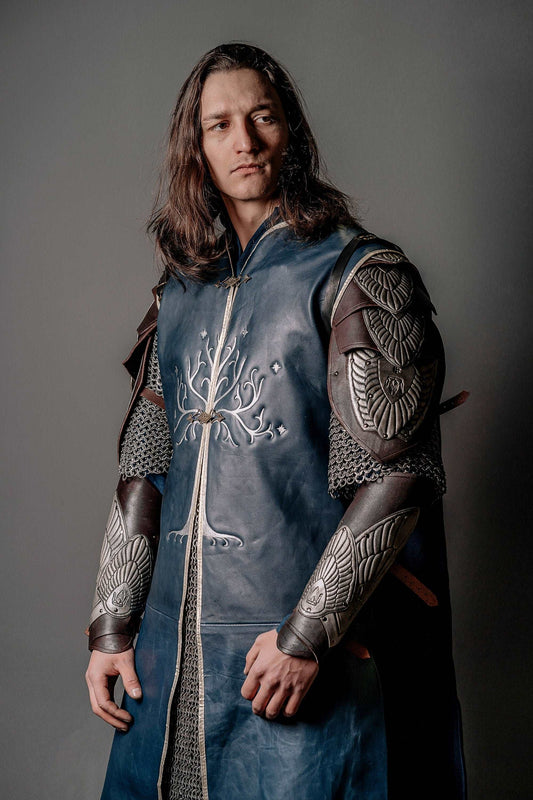
A ranger-inspired outfit usually reads through an earth-tone tunic, fitted vest or coat, bracers, dark trousers, and sturdy boots. An elf-inspired look tends to use a cleaner line, shaped arm guards, tall footwear, and a narrower color palette. A noble or armored warrior may need a more structured torso, polished details, and a cloak with greater visual weight.
Write down three defining features before shopping. For example: long weathered coat, brown leather arm guards, and high boots. That short list keeps the outfit coherent and prevents unrelated details from competing for attention.

Build the silhouette with the outer layer
The coat or cloak determines much of the costume's outline. Check the shoulder width, sleeve length, hem length, closures, and room for the layers underneath. A long coat should clear the ground with the intended boots and should not catch behind the knees when you climb stairs.
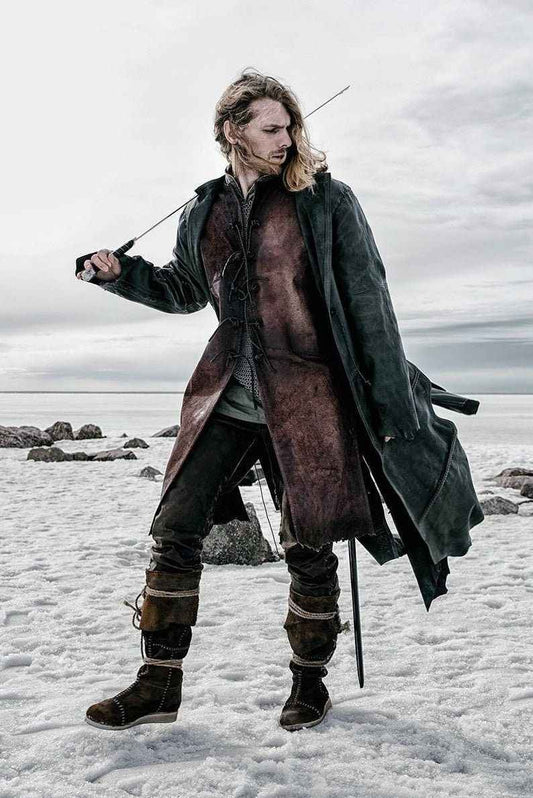
The active Aragorn Strider black duster listing describes one handmade natural-leather coat, made to individual measurements and available for personalization requests. Its close product photograph shows the worn black finish, hand stitching, sleeve shaping, and front ties. Treat those construction details as part of the visual language rather than adding unrelated ornament everywhere else.
Wear the coat over the planned tunic and vest during fitting. Reach forward, cross both arms, sit, and kneel. If the shoulders bind or the front pulls open, accessories will not correct the underlying fit.
Layer from soft garments to structured leather
Start with the shirt or tunic, add trousers, then fit the vest and outer coat. Bracers, belt, cloak, and footwear come afterward. This order matters because every leather layer changes the space available for the next piece.
The active Aragorn duster costume listing names a leather coat, leather vest, bracers, linen tunic, leather pants, and boots. It also says the parts can be ordered separately. Confirm the live option instead of assuming that every photographed item or prop belongs to the selected package.

Decide between a full costume and separate pieces
A complete set provides a ready-made color story and matching proportions. Separate pieces give you more control over comfort, budget, and how closely the outfit follows your own character concept. The better choice depends on what you already own.
Inventory your usable base garments first. A neutral linen shirt or well-fitting trousers may disappear under the leather layers, allowing you to focus on the visible coat, bracers, belt, and boots. If you order parts separately, compare them in the same lighting. Browns that look similar on different screens may vary in hue and finish.
Keep weapons and display props outside the clothing checklist unless the listing explicitly includes them. Event organizers may also restrict costume weapons, shields, or rigid equipment.
Use bracers to reinforce the design
Arm guards are small enough to add detail without changing the whole silhouette. Their shape, lacing, engraved lines, and hardware can repeat motifs from a belt or coat. They also need to fit over the exact sleeve you plan to wear.
The active Legolas leather bracers listing offers brown or black leather with brass or stainless-steel accents and options for one or two pieces. The listing describes handmade coloring, engraving, and molding. Choose the quantity and finish deliberately; a listing photo of a pair does not replace the selected option.

Test arm movement before the event
Fasten each bracer over the intended sleeve. Bend the elbow completely, rotate the wrist, make a fist, and reach across the chest. The upper edge should not cut into the elbow, while the lower edge should leave the wrist free enough for normal hand movement.
Wear the bracers for at least 20 minutes during a full fitting. Adjust laces or straps before adding gloves. If the costume includes archery styling, remember that a decorative arm guard is not automatically certified sports equipment.
Choose footwear for the venue
Footwear must support the actual surface: convention flooring, grass, gravel, stairs, or a stage. High boots can anchor an elf or ranger silhouette, but shaft height, calf fit, instep room, and sole traction matter more than a dramatic photograph.
The active Tauriel leather high boots listing names a pair made from natural leather with a thick sole and requests foot length plus ball, heel, instep, ankle, and calf circumferences. Measure while wearing the socks intended for the event.
Coordinate color without making everything identical
A useful palette has one dominant color, one supporting neutral, and one controlled accent. A ranger outfit might combine dark brown, muted green, and black metal. An elf-inspired outfit might use warm brown, moss green, and a small brass accent.
Exact matching is unnecessary. Slight variation can make separate layers easier to read. What matters is consistent temperature and finish: warm browns together, or blackened leather with cool metal. Repeat an accent in two or three places rather than on every surface.
Measure over the correct layers
Follow the SokolArmory measurement guide and the instructions on each product page. Record the clothing worn for every measurement. A forearm measured over bare skin will not describe the same fit as a bracer worn over a thick sleeve.
For long coats, check shoulder width, chest, waist, sleeve length, and desired hem clearance. For bracers, measure both arms when requested. For tall boots, measure both feet and calves with the intended socks. Tell the maker about padding, asymmetry, or bulky layers instead of compensating by guessing a larger size.
Plan for heat, weather, and storage
Leather coats, vests, bracers, and tall boots can trap heat. For indoor events, make the outer layer easy to remove. For outdoor events, bring weather protection appropriate to the venue and keep a dry place for leather pieces after use.
Practice packing the costume without crushing shaped parts. Keep detachable straps and small hardware together. Let damp garments dry according to their care instructions before storage; do not rely on generic care advice when the maker provides product-specific directions.
Run a complete wear test
Dress in the same order you will use at the event. Walk for 30 minutes, sit in a standard chair, climb stairs, crouch, reach overhead, and turn quickly. Check the coat hem, boot shafts, bracer edges, belt placement, and every closure.
Take front, side, and back photos in neutral light. The images reveal uneven hems, hidden straps, and color conflicts more reliably than a mirror. Make adjustments before adding optional props.
Buying checklist
- Choose one character direction and three defining features.
- List the base garments and costume pieces you already own.
- Confirm the live option and written list of included parts.
- Measure over the layers that will be worn underneath.
- Match footwear to the real venue surface.
- Check event rules for props and costume weapons.
- Test the complete outfit while walking, sitting, and using stairs.
Browse the SokolArmory costume collection to compare complete sets and separate pieces. If the available configuration does not suit the character or measurements, ask SokolArmory about the custom-order process before making assumptions about possible changes.


User Name 2 Days ago
Lorem ipsum dolor sit amet, consectetuer adipiscing elit. Aenean commodo ligula eget dolor.