
Full Costume or Separate Pieces: What Should You Buy First?
If you are deciding between a full costume and separate pieces, buy the full set when you want one coordinated look and expect to use nearly every included component. Build from separate pieces when you already own part of the outfit, need more control over fit and heat, or want to spread the project across several events. Neither route is automatically better or cheaper; the right choice depends on what is missing from your wardrobe and how you plan to wear the costume.
The most reliable way to decide is to list every piece you need, compare that list with exactly what the product option includes, and identify the parts that are hardest to match later. This guide walks through that comparison using SokolArmory's current Ragnar costume listing as a practical example.
Start with a gap list, not the hero photo
Write down the costume from the skin outward: base shirt, pants, footwear, belt, armor or vest, bracers, outer layers, and accessories. Mark each item as already owned, acceptable to substitute, or still needed. This prevents you from buying a complete set only to discover that it duplicates good boots or a base layer you already have.
Then identify the two or three identity pieces that make the character readable. For a Viking-inspired outfit, that may be a distinctive vest, a decorated tunic neckline, and the belt or bracer treatment. Those pieces deserve the closest match. Plain underlayers can often be chosen for comfort, while visible leather and trim should be considered together so the colors and proportions do not fight each other.
When comparing options, read the written contents and the variant selector separately. A product page may present a full outfit in the main photographs while also offering individual components. The selected variant—not the photograph alone—determines what you are ordering.

When a full costume is the stronger first purchase
A complete costume makes the most sense when you are starting with an empty wardrobe and want the photographed layers to work as a system. The maker has already made decisions about color, material, scale, and where one layer overlaps another. That reduces the number of compatibility questions you have to solve.
Choose the full set first when most of these statements are true:
- You need nearly every major garment and leather component.
- A coordinated screen-inspired appearance matters more than mixing the pieces into other outfits.
- You are comfortable following one maker's measurement method for several garments.
- You have enough time before the event to try the complete combination and resolve fit questions.
- You have a plan for packing, storing, and maintaining all of the included pieces.
The main advantage is coherence. The main risk is dependency: one incorrect measurement can affect several layers, and a piece that feels fine alone may become restrictive under a vest, belt, or bracer. Measure over the underlayers you intend to wear and follow the maker's instructions rather than adding your own allowance. SokolArmory's measurement guide is the correct starting point for its products.
When separate pieces are the better foundation
Separate pieces are usually the more flexible route when you already own usable basics, expect to wear the costume in different conditions, or want components that can move between characters. You can test the fit and comfort of one important layer before committing to the rest. You can also prioritize the piece that carries the silhouette, then add supporting garments later.
Build separately when several of these statements fit your situation:
- You already have pants, boots, a shirt, or a belt that works with the design.
- You need different sizing or proportions across the upper body, waist, hands, and feet.
- You want a removable armor layer for warm venues or long event days.
- You plan to reuse the tunic, bracers, boots, or belt in other LARP or cosplay combinations.
- You are still deciding how historically inspired, screen accurate, or original the final look should be.
The tradeoff is that you become the art director. Brown and black leather can vary in undertone and finish. A belt may sit at the wrong height for a vest. Boots can change the apparent length of pants. Save product photographs, compare measurements, and ask about unclear combinations before ordering.

Compare the complete scope, not just the checkout total
Make two columns: “full set” and “piece by piece.” Under each, list the items you would actually receive and the work that remains. Include any underlayer, footwear, closures, or accessories you still need to source. Also consider the time required to compare colors, communicate measurements, test combinations, and make adjustments.
A full set can be efficient if every component fills a real gap. It is poor value if several parts stay in storage. Individual pieces can make the project easier to stage, but repeated decisions and separate orders can add time. The useful comparison is the cost and effort of reaching a wearable outfit—not the price of one option viewed in isolation.
Do not assume a payment label changes what is included. Confirm the chosen option and its component list. If a standard listing does not match your reference or measurement needs, use the custom-order page to discuss the request instead of assuming that an unlisted change is included.
What the current Ragnar listing shows
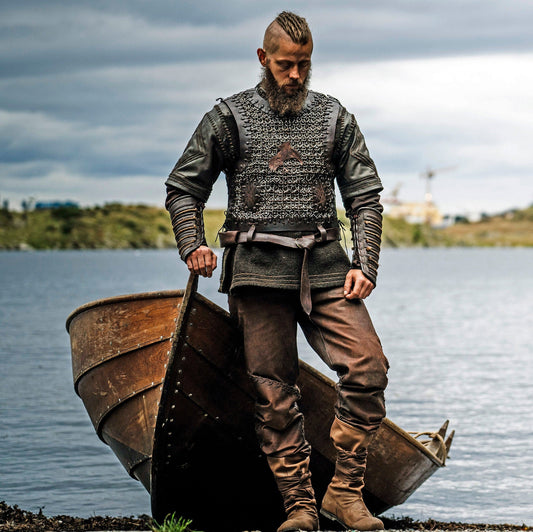
The active Ragnar costume (Vikings season 2), SKU cst001, demonstrates why the option selector matters. The written description lists a vest with chainmail, an under-shirt, a belt, bracers, leather pants, and boots as parts of the full costume. The current selector offers full-costume payment options in S through XL and also lists six individual component types in S through XL: vest with chainmail, wool tunic, thin belt, a pair of bracers, leather pants, and a pair of boots.
There is a naming difference worth noticing before purchase: the written included-parts text calls the underlayer a leather shirt, while the current individual option calls it a wool tunic. The written text also uses a general belt label while the individual option says thin belt. If the material or exact component is important, ask SokolArmory to confirm the selected option in writing. This is better than inferring contents from an image or from two labels that are not identical.
The listing supports both buying strategies. Someone who needs the full coordinated outfit can choose a full-costume option. Someone who already owns several layers can select a listed component such as the vest, tunic, belt, bracers, pants, or boots. Check the live selector again when you order because product options can change.

Choose the first separate piece by visual impact
If you are building gradually, start with the hardest visible piece to substitute. A distinctive vest or armor layer usually defines more of the silhouette than a plain base garment. A decorated tunic can be the better first purchase when it remains visible and can anchor several outfits. Bracers are useful finishing pieces, but they rarely solve an otherwise generic torso silhouette.
Browse the costume collection to see how complete looks are layered, then compare those looks with the individual product you are considering. The Our Heroes gallery can help you judge proportion on people rather than isolated products. Treat gallery photographs as visual references, not as a list of what a current product includes.
After choosing the identity piece, add the component that solves the next practical problem. That might be a comfortable base layer, a belt that supports pouches, or footwear that you can test on a full day. This sequence produces a usable outfit sooner than buying small decorative details at random.
Fit, heat, and movement can change the answer
A complete layered costume may be ideal for photography but excessive for a hot outdoor fair. Separate pieces let you remove a vest or armor layer without abandoning the whole outfit. For a cool indoor event, the coordinated set may be easier because you can plan and test every layer together.
Before the return or adjustment window passes, wear the planned combination indoors. Raise both arms, bend your elbows, sit, take a long stride, and use your phone. Check whether bracers meet your hands, whether a belt shifts the vest, and whether pants bunch inside the boots. Repeat the test with the bag, cloak, or prop you expect to carry.
Customer comments on the Happy Customers page can suggest useful questions about fit and wear, but another customer's result cannot replace your own measurements or a complete test.
A simple decision rule
Choose a full costume if you need at least four of its major components, want the maker's coordinated look, and can test all the layers well before the event. Choose separate pieces if you already own reliable basics, need greater control over fit or temperature, or want each purchase to work in more than one outfit.
Before checkout, complete this final review:
- List what you own and what is still missing.
- Identify the pieces that create the character's silhouette.
- Confirm the exact selected variant and included components.
- Resolve any difference between the written description and option labels.
- Measure over the intended underlayers using the maker's method.
- Plan for heat, sitting, walking, transport, and storage.
- Leave time to test the complete combination before the event.
The best first purchase is the one that closes the largest real gap in your costume. If every major layer is missing, a full set gives you a coordinated foundation. If you already have a workable base, one well-chosen vest, tunic, pair of bracers, or pair of boots can move the project forward without replacing pieces you already trust.


User Name 2 Days ago
Lorem ipsum dolor sit amet, consectetuer adipiscing elit. Aenean commodo ligula eget dolor.