
How to Choose a Cosplay Costume for a Convention
Choosing a cosplay costume for a convention is less about finding the most elaborate set and more about choosing one you can wear for the day you have planned. A costume may look excellent in a studio photograph but still be wrong for a crowded exhibit hall, a long walk from the hotel, a panel schedule, or a prop policy.
Before you buy, define the event, the character, and your practical limits. Then compare complete costumes and individual pieces by fit, movement, visibility, temperature, transport, and the work still required after delivery. This guide gives you a repeatable way to make that decision.
Check the convention rules before choosing the costume
Start with the current rules published by your specific event. Do not assume that a prop accepted at one convention will be accepted at another. The official Comic-Con convention policies, for example, require costume props to be inspected daily, prohibit functional or sharp-edged props, and note that oversized costumes may be restricted when crowds create a safety issue. Those details can change, so check again shortly before travel.
Look for rules on weapons and replica props, masks, stilts, large wings, costume dimensions, face coverings, electronics, and required inspection. If the policy is unclear, contact the organizer with a photo and the dimensions of the questionable item. A costume that cannot pass the entrance procedure is not a practical convention costume.
Choose the version of the character you can actually complete
Decide whether you want a close recreation, a recognizable interpretation, or an original character built from a familiar visual language. A close recreation usually needs more matched components. An interpretation gives you room to simplify footwear, omit a prop, or substitute a lighter underlayer while keeping the silhouette and color story recognizable.
Make a reference sheet with front, back, and detail views. Divide the look into three groups:
- Identity pieces: the coat, armor shape, color block, hairstyle, or emblem that makes the character readable.
- Supporting pieces: shirts, pants, belts, gloves, and boots that complete the silhouette.
- Optional pieces: props, jewelry, weathering, and small details that can be added later.
Put most of the budget and fitting time into the identity pieces. A strong coat or cuirass usually contributes more than several small accessories that disappear in photographs.

Compare the silhouette before the surface details
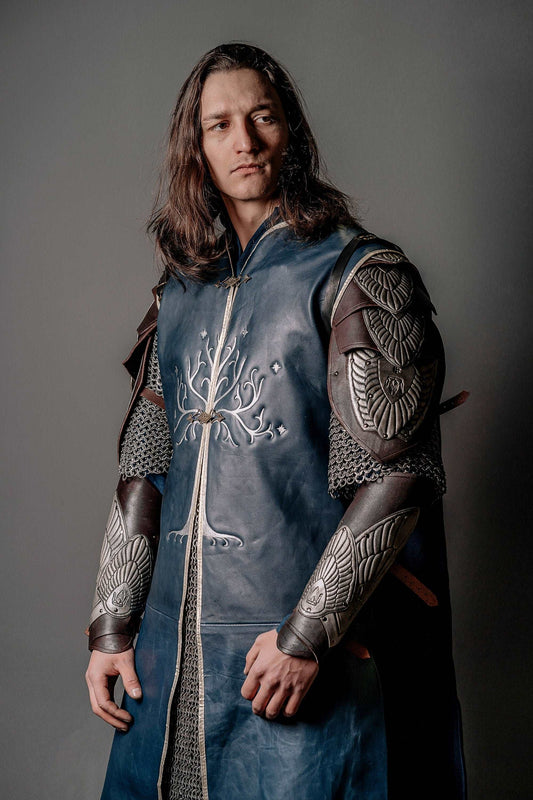
When browsing the SokolArmory costume collection, first compare the overall shape: shoulder width, torso length, coat hem, skirt volume, armor profile, and headpiece height. These features determine how the character reads from across a hall. Color and decoration matter, but they cannot fully correct a silhouette that belongs to a different design.
Use the product photographs to identify where each layer begins and ends. Check whether the pictured costume includes a base garment under the armor, how a belt changes the waist, and whether the outer layer is meant to close at the front. Product photos can also reveal where pieces overlap, which matters when you take measurements.
The Our Heroes gallery provides another useful reference for seeing complete outfits on people rather than isolated parts. Treat gallery images as visual references, not as a guarantee that every pictured component belongs to a current listing.
Test movement, sight lines, and basic tasks
A convention costume must work while you walk, wait in line, use stairs, sit for a panel, carry a bag, and pose for photographs. Before ordering, list the movements your design may restrict. Long coats can catch under a chair. Wide shoulder pieces can collide with doorframes. Bracers may meet the edge of a phone. A high collar or helmet can reduce side vision.
Once you have the costume, test the full combination rather than each item alone. Raise both arms, cross them in front of your chest, look over each shoulder, sit in a standard chair, crouch, and take a long stride. Put your phone, badge, wallet, and water in their planned locations and repeat the test. If a handler will accompany you, agree on simple signals for stairs, crowds, and costume adjustments.
Plan for restroom access as well. Count the closures and layers that must be removed, and decide where loose pieces can be placed safely. This is not glamorous, but it can determine whether a complex costume remains wearable for a full day.

Plan for heat and indoor conditions
Convention halls can feel cool in one room and hot in a packed aisle. Leather, padded garments, wigs, masks, and overlapping layers hold heat differently, so build a removable layer plan. Decide which outer piece can come off without leaving the costume incomplete, and identify a safe place to carry it.
Do not test a new costume for the first time at the event. Wear the complete outfit indoors for at least an hour. Include the wig, headwear, gloves, footwear, and any bag you expect to carry. Watch for pressure at the neck and shoulders, rubbing at the wrist or ankle, heat buildup, and hardware that touches bare skin.
Read the maker's measurement method instead of relying only on a usual letter size. SokolArmory maintains an about measurements page for its orders. Measure over the underlayers you intend to wear and do not add ease unless the maker's instructions request it.
Read the listing as a parts list
Product titles and hero photographs do not always tell you exactly what arrives. Find the written list of included components, then compare it with the variant selector. Note anything shown only for styling. If a listing offers a full set and individual pieces, confirm which option is selected before checkout.
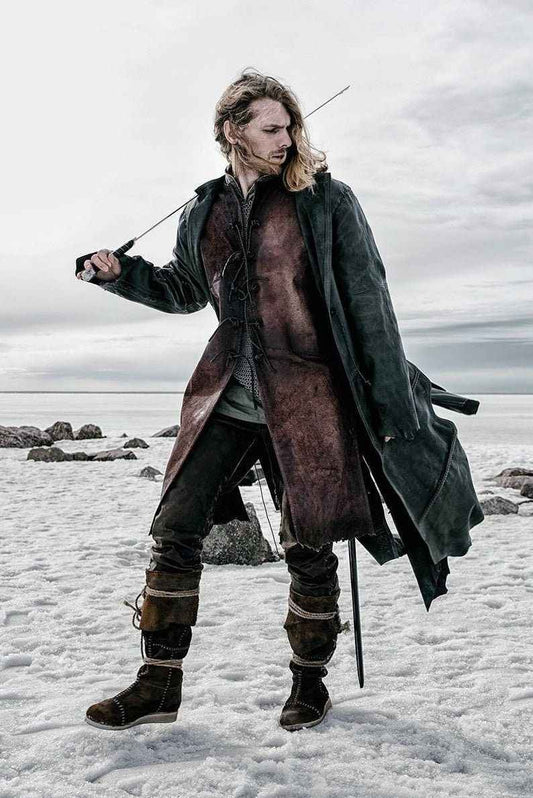
The active Aragorn duster costume, SKU cst002, is a useful example. Its listing describes a full costume with a leather coat, leather vest, bracers, linen tunic, leather pants, and boots, while the current variant selector also offers the leather coat and leather vest separately in several letter sizes. That makes the selection step important: the product page represents both a complete look and component purchases.
The listing also notes that display accessories may not be included and directs buyers to the pictured size chart. Use those details as prompts for written confirmation when any component, color, or sizing point is essential to your plan. For a design that needs different materials, colors, or proportions, send references through the custom-order page before assuming a standard listing can be altered.

Choose accessories by function and crowd safety
Add accessories after the core costume fits. Start with the items needed for recognition, then add only what you can transport and manage safely. A belt should support its load without twisting. A pouch should hold something you will use. A prop should meet the event's current rules and remain controllable in a crowded aisle.
Check the costume from several distances. Small details help close photographs, while large shapes and color contrasts help the costume read across the room. If a detail creates a snagging point, blocks your vision, or needs constant adjustment, simplify it before the convention.
Plan transport, repair, and storage
Measure the packed costume as well as the worn costume. Rigid armor, hats, and long props may need their own case. Photograph the packing order so you can repack it at the hotel. Keep delicate painted surfaces separated and place small fasteners in labeled bags.
Carry a repair kit appropriate to the actual materials and closures. It may include spare laces, matching thread, safety pins for textile underlayers, approved adhesive for a known repair, and a small cloth. Do not test an unfamiliar cleaner, dye, polish, or conditioner immediately before the event.
Customer comments on the Happy Customers page include individual experiences with fit and wear. Reviews can suggest questions to ask, but they do not replace your own measurements or a full-costume test.
Use a final buying checklist
- Confirm the convention's current costume and prop rules.
- Choose a close recreation, interpretation, or original design.
- Identify the two or three pieces that create the character's silhouette.
- Read the included-parts list and variant selection separately.
- Measure over the planned underlayers using the maker's method.
- Check sight lines, seating, stairs, restroom access, and heat.
- Plan how every rigid or delicate piece will travel.
- Complete an hour-long wear test with footwear and accessories.
- Remove any prop or detail that fails the event rules or crowd-safety test.
The best answer to how to choose a cosplay costume is practical: select the look that remains convincing after you account for rules, fit, movement, and a full convention day. Start with the identity pieces, verify exactly what the listing includes, and leave enough time to test the complete outfit before travel.



User Name 2 Days ago
Lorem ipsum dolor sit amet, consectetuer adipiscing elit. Aenean commodo ligula eget dolor.