

Leather vs. Fabric LARP Armor: What Changes in Real Use
Leather and fabric LARP armor solve different problems. Leather is usually chosen for a defined outer silhouette, shaped panels, and visible surface work. Padded textile armor is usually chosen as a flexible garment, an underlayer, or a complete look with softer lines. Neither material is automatically the better purchase. The useful question is what the piece must do during your event.
This comparison focuses on real wear: movement, layering, weather, storage, event rules, and maintenance. Here, "fabric armor" means a purpose-built padded garment such as a gambeson, not an ordinary costume shirt.
What changes when the material changes?
A leather cuirass is built from panels that keep more of their shape off the body. Shoulder pieces, bracers, straps, rivets, and overlapping sections can create a strong armored profile. The construction also places firmer edges and hardware near moving parts, so correct proportions and adjustment matter.
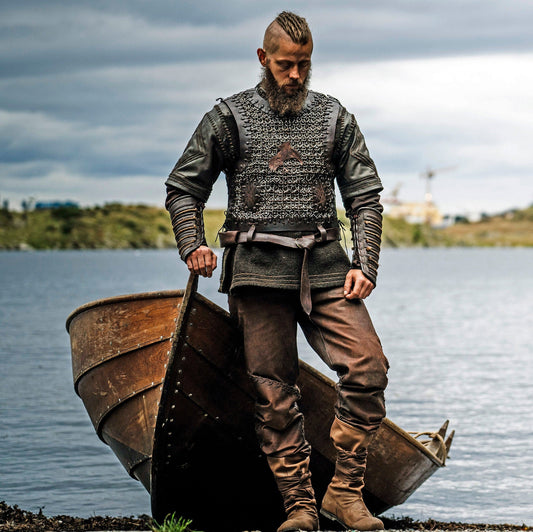
A padded textile garment follows the torso and limbs more closely. It can fold at the waist and elbows, but padding, seams, closures, and leather trim still add bulk. Two gambesons made from different patterns may feel less alike than their shared material label suggests. Compare the complete design rather than treating "fabric" as one standard category.
Leather vs. padded fabric at a glance
- Silhouette: Leather panels tend to hold a sharper outline; padded textiles create a softer, garment-like profile.
- Movement: Textile bends throughout the garment. Leather movement depends heavily on panel shape, articulation, strap placement, and clearances at the neck, arm, and hip.
- Layering: Leather often works as the visible outer shell. A gambeson can be the main garment or the padded layer beneath another piece.
- Packing: A textile garment is generally easier to fold. Shaped leather should be packed without crushing creases or loaded hardware.
- Care: Both need to be dried and stored correctly, but the correct method depends on the actual leather finish, fiber content, padding, dye, and hardware.
These are starting points, not promises. Thickness, pattern, lining, fit, and workmanship can outweigh the broad material category.

Movement and fit: test the whole assembly
Leather armor needs space where the body changes angle. Raise your arms, bring them across your chest, sit, crouch, and take a long stride. Watch where a pauldron meets the neck, where the cuirass ends above the hip, and whether bracers collide with gloves. A loose strap is not a cure for an edge that sits in the wrong place.
Padded fabric compresses, but it also occupies room. A cuirass measured over a shirt may not fit over a thick gambeson. If you plan a layered kit, take and confirm measurements over the intended undergarment. SokolArmory's measurement guidance is the right starting point for its made-to-measure pieces.
Do a continuous wear test before the event. Thirty to sixty minutes of walking, sitting, and handling props will reveal rising hems, twisted straps, restricted reach, and pressure points that a mirror check misses.
Heat, rain, packing, and care
No material label tells you exactly how hot a finished kit will feel. Coverage, padding, lining, color, airflow, activity, and the layers underneath all contribute. A thick gambeson can retain warmth; a broad leather torso can also reduce airflow. Plan a lighter configuration and regular breaks for warm conditions instead of assuming one category will solve heat by itself.
Rain changes the practical comparison. Padded fabric may take time to dry after it becomes wet, while leather should not be left saturated, folded, or next to wet textiles. Ask the maker for care instructions for the specific finish and materials. After the event, separate the layers, let them dry appropriately, and inspect hidden contact points around straps and hardware before storage.
For travel, protect the shape of leather pieces and keep buckles from scraping nearby items. Textile armor is usually easier to compress, but aggressive packing can crease trim or deform dense padding. Give either option enough time to air after transport.

Material does not decide event legality
Do not assume that leather, padding, or a historical name guarantees armor points or combat approval. Organizers may define minimum thickness, coverage, construction, safe edges, or permitted materials differently. Some systems distinguish protective equipment from costume pieces.
Read the current rules for the exact chapter and event, then ask staff about ambiguous equipment before arrival. The official Amtgard documents page, for example, maintains its own rules resources; another game may use a different definition. A store listing cannot approve gear for an organizer.
Why a hybrid kit often makes sense
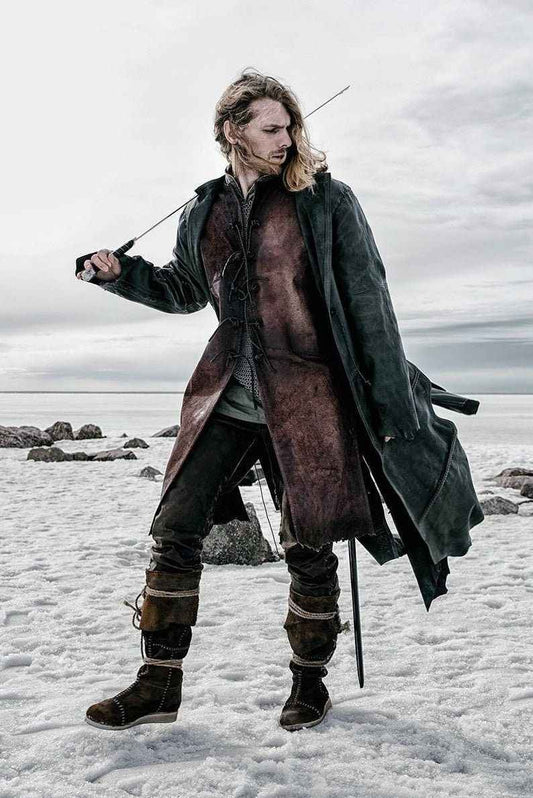
Leather and textile do not have to compete for the same job. A padded coat can establish the base silhouette, cover the arms, and sit beneath a structured torso. Leather can add defined chest, shoulder, or forearm elements without turning every visible layer into rigid panel work.
SokolArmory's active Bjorn body armor listing is a clear example: it pairs leather body armor with a cotton gambeson. The active long gambeson coat uses a padded textile body with leather details. These combinations show how materials can divide roles inside one costume.
Build the layers together on paper before ordering. Record the intended order, closures, belt position, weapon suspension, and measurements over each lower layer. This prevents a good individual piece from becoming unusable inside the final stack.

A verified leather example from SokolArmory
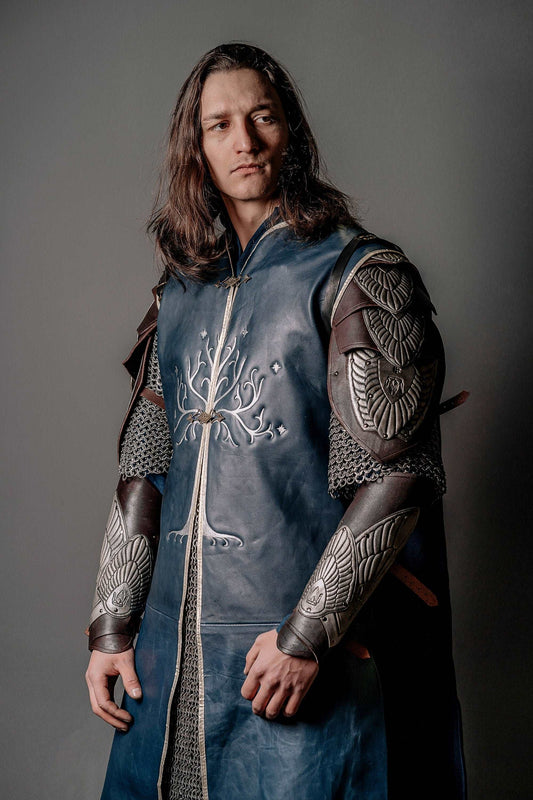
The current Medieval LARP armor set includes a leather cuirass with pauldrons and matching vambraces. Its listing describes handmade leather work, custom coloring, engraving, molding, artificial aging, and production to individual measurements. The photographs show overlapping shoulder construction, adjustable side straps, front and back panels, metal-laced chest details, and reinforced bracers.
That makes it a useful example of what buyers should inspect in structured leather armor: the front image explains the silhouette, the back shows coverage and fastening, and close views reveal edges and hardware. Browse the wider armor collection to compare those choices with other body and limb pieces.
Which option should you choose?
Choose structured leather when...
- Your character needs a defined armored outline and visible panel work.
- You want separate torso, shoulder, or forearm components.
- You can transport and store shaped pieces without crushing them.
- You are prepared to inspect straps, hardware, edges, and the maker's care directions.
Choose padded textile armor when...
- You want a garment that bends throughout more of its surface.
- You need an underlayer beneath leather, mail, or another approved outer piece.
- A foldable garment is more practical for your travel and storage.
- The softer silhouette suits the character better than separate hard-edged panels.
Choose a hybrid when...
- You want textile coverage with selected leather focal points.
- Your outer armor needs padding or a complete garment underneath it.
- You can fit and test every layer as one system.
Before commissioning a variation, gather the event rules, reference images, intended layers, required coverage, and your confirmed measurements. Send that brief through the custom-order page. For additional perspective on finished orders, read the customer feedback page, but treat individual comfort reports as personal experiences rather than universal proof about a material.
The strongest choice is the one whose construction matches its role. Use leather for shape and surface detail, padded textile for flexible garment coverage or a base layer, and a hybrid when each material can do the job it handles best. Then confirm the rules and prove the complete kit in motion.


User Name 2 Days ago
Lorem ipsum dolor sit amet, consectetuer adipiscing elit. Aenean commodo ligula eget dolor.